How to Become a LinkedIn Top Voice in 2026, and Why
Learn how to become a LinkedIn Top Voice in 2026. What the badge means, who gets it, how to earn it, and how Kleo helps you build the presence that makes it inevitable.
Every time you scroll through LinkedIn, you see them. A blue or gold badge sitting next to someone's name, signaling to the world that this person isn't just posting, they are recognized. By the platform itself. As someone worth listening to.
It's easy to dismiss the badge as a vanity metric. But talk to anyone who has earned LinkedIn Top Voice status, and they'll tell you the same thing: the badge didn't change their credibility. The credibility earned the badge.
And everything that came with building that credibility, the audience, the inbound opportunities, the speaking invitations, the deals, that's what actually changed their career.
This guide is about both things. How to earn the badge. And how to build the kind of LinkedIn presence that makes the badge almost inevitable.
Important: LinkedIn has two types of Top Voice badges. This guide covers both badges and explains exactly which path is right for you.
What is a LinkedIn Top Voice?
LinkedIn Top Voice is the platform's official recognition program for its most influential and consistent creators. If you've been on LinkedIn for any length of time, you've seen the badge, a small blue or gold label that appears on someone's profile, right under their name.
The program was previously known as the LinkedIn Influencer program before being renamed Top Voices in October 2022. Today, it sits at the heart of how LinkedIn identifies and surfaces authoritative voices across industries.
When LinkedIn wants to point its members toward quality content on leadership, marketing, data science, or entrepreneurship, it starts with the Top Voices.
There are two very different versions of the badge and understanding the difference is the first thing anyone serious about earning one needs to know.
The gold badge program was briefly retired in October 2024 but has since been relaunched with updated requirements. If you previously held a gold badge, you will need to renew it through active contributions.
The Top Voice Blue Badge
The blue badge is LinkedIn’s most selective recognition. It’s awarded by invitation only, to roughly 300 people globally each year. LinkedIn’s editorial team selects recipients based on content quality, niche authority, audience engagement, and consistency over time.
There is no application. You cannot fast-track it. The only path is building a LinkedIn presence so strong that LinkedIn comes to you. Most creators who earn it have been posting consistently in a defined niche for 12 to 24 months before the badge arrives.
The blue badge is renewed every six months, which means it reflects what you’re doing now, not what you did two years ago.
The Top Voice Gold Badge
The gold Community Top Voice badge works differently. You earn it by contributing substantively to LinkedIn’s Collaborative Articles in your area of expertise.
These are AI-generated pieces on professional topics that invite community members to share their real-world knowledge. When your contributions get upvoted by other professionals, LinkedIn recognizes you with the gold badge.
Around 7,000 people hold it at any given time, making it significantly more accessible than the blue badge. It also expires if you stop contributing, so it’s a live signal of your current activity, not a permanent award. The gold badge was briefly retired in October 2024 and has since been relaunched with updated requirements.
How Many People are LinkedIn Top Voices?
The exclusive "blue badge" invitation-only program is estimated at a few hundred to a few thousand globally and the "gold badge" Community Top Voice has thousands of members globally.
According to data from Favikon, there are around 7,000 LinkedIn Top Voice contributors worldwide at any one time across all topic categories. With LinkedIn's 1 billion+ member base, that means fewer than 0.001% of users hold either badge.
Why Become a Top Voice on LinkedIn?
Let's be direct about this. The exact criteria for being given a badge is a mystery.
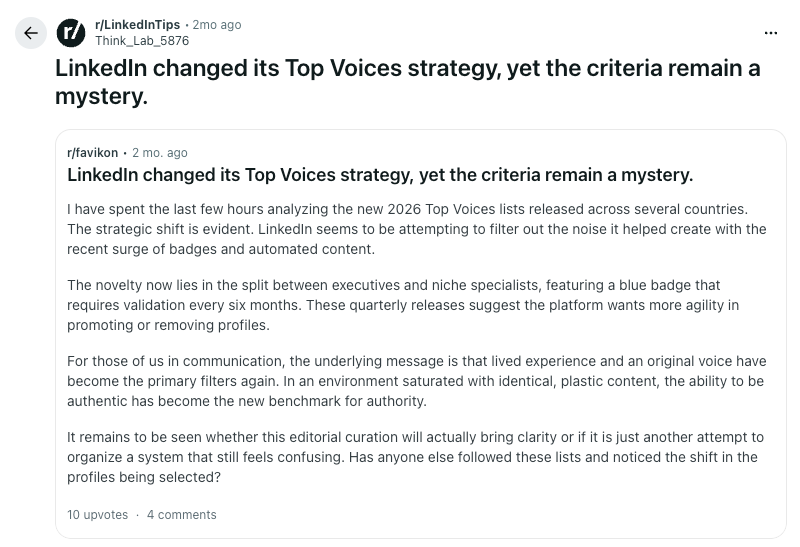
Also, the badge itself does not put money in your bank account. What it does is compress the trust-building process. Someone who lands on your profile with a Top Voice badge makes a different initial judgment about you than someone without one.
You become, in their eyes, someone LinkedIn has vetted.
Here's what that translates to in practice:
Increased visibility in the feed
LinkedIn's algorithm actively surfaces Top Voice content to a wider audience. Your posts reach beyond your immediate network into topic-based discovery feeds, themed carousels, and LinkedIn's editorial spotlights. This is a meaningful algorithmic advantage.
Credibility that shortens sales cycles
Many sales teams use LinkedIn tools like Skrapp.io to automate outreach for sending connection requests and intro messages on LinkedIn. With this type of cold outreach, conversations start differently when prospective clients see that LinkedIn itself recognizes your expertise. You no longer need to spend the first part of every message establishing credibility because the badge already does some of that work for you.
Speaking opportunities and media features
Conference organizers and journalists actively scan LinkedIn's Top Voice lists when looking for expert speakers and sources. Earning Top Voice status puts you on the shortlist before you've even applied for anything.
Stronger network, faster
Top Voice status increases connection acceptance rates because the badge functions as editorial vetting. People who wouldn't have accepted a cold connection request from you in January will accept one in December if you're a Top Voice in their field.
Early access to LinkedIn features
LinkedIn has historically given Top Voices early access to new features, Audio Events, Collaborative Articles, and newsletter tools. Being in the program gives you a first-mover advantage on whatever LinkedIn ships next.
The real win isn't the badge. It's the audience, the authority, and the inbound opportunities you build on the way to earning it.
Is Becoming a LinkedIn Top Voice Worth It?
Yes, absolutely, with one important caveat. It is worth it if you approach it correctly.
The creators who end up disillusioned with the pursuit of Top Voice status are almost always the ones who chased the badge rather than the underlying behavior.
- They posted more frequently without improving quality.
- They engaged performatively rather than genuinely.
- They burned out six months in and stopped, having built nothing durable.
The creators who end up genuinely transformed by the journey are the ones who decided to build a real LinkedIn presence, deep niche expertise, consistent voice, and genuine community engagement, and found that the badge followed naturally.
The pursuit of Top Voice status is worth it precisely because the things you have to do to earn it are the same things that generate inbound clients, speaking invitations, job offers, and business partnerships. You're not working toward a badge. You're building a personal brand that compounds over time.
One honest note: the blue badge is genuinely hard to get if you're starting from scratch.
Expect a 12 to 24-month runway of consistent, high-quality content before LinkedIn takes notice. The gold badge through Collaborative Articles is faster, but it's also less impactful on its own without the broader content strategy to back it up.
How to Become a LinkedIn Top Voice: The Step-by-Step Approach
There is no application form you fill out to become a Top Voice and there are no shortcuts. There is no single viral post that earns you the badge. It is an invitation-only honor that LinkedIn subjectively awards at its discretion to creators who have demonstrated consistent authority on a particular subject.
And as we mentioned before, the exact criteria are a mystery.
What there is, however, is a pattern of behavior that LinkedIn's editorial team and algorithm seem to recognize over time. Here's what that pattern looks like.
Step 1: Pick a niche and own it
The single biggest mistake aspiring Top Voices make is posting about everything. Leadership one day, marketing the next, AI the day after, personal anecdotes on Friday. This is not how Top Voices are built.
LinkedIn awards Top Voice status based on expertise in a specific domain.
- Adam Grant is the Top Voice in organizational psychology.
- Richard van der Blom is the Top Voice in LinkedIn algorithm research.
- Brene Brown became famous for psychology.
Each of them became undeniable within a defined space before the badge arrived.
Choose your niche carefully.
It should be specific enough to own but broad enough to have an audience. 'Leadership' is too broad. 'Leadership for first-time engineering managers at B2B SaaS companies' is specific and ownable. Find the version of your expertise that has that balance.
The narrower your niche, the faster you become the go-to person in it. Top Voice status follows authority, and authority requires focus.
Step 2: Post consistently, without exception
LinkedIn's algorithm is a consistency machine. It rewards creators who show up regularly and penalizes those who disappear for weeks and return with burst posting. The pattern that works is simple: three to five posts per week, every week, without gaps.
This sounds manageable until week six, when you've run out of obvious ideas, you're busy with actual work, and the post you just published got 47 impressions. That's the moment that separates creators who build Top Voice-level audiences from those who don't.
The ones who push through that period and keep posting build the momentum. The ones who stop never quite recover it.
The consistency requirement is also why tools matter.
A content system that helps you generate ideas, write faster, and schedule in advance is not a luxury; it is the infrastructure that makes consistent posting possible alongside real life.
Step 3: Write posts that teach, not posts that perform
LinkedIn's Top Voice algorithm cares about one thing above everything else: does this person's content make other professionals better at their work or life? Neither does it get likes. Not only does it go viral. Does it genuinely deliver value to the people reading it?
The posts that earn Top Voice-level traction share a consistent structure. They start with a hook that speaks directly to a real problem or curiosity. They deliver a specific, actionable insight that the reader didn't have before they started reading. And they end with a clear perspective or call to reflect, not a generic 'what do you think?' but a genuine invitation to continue the conversation.
The format matters less than the substance. Long-form posts, short sharp takes, carousels, newsletters, all of them work. What doesn't work is content that exists purely to perform. LinkedIn's audience is made up of professionals.
They can smell a post that was written to get engagement rather than to deliver value, and they disengage accordingly.
Step 4: Build genuine engagement, and respond to every comment
Engagement is not vanity. On LinkedIn, comments signal to the algorithm that your content is worth amplifying. But more importantly, the quality of your comment section signals to LinkedIn's editorial team that you have built a genuine community rather than just an audience.
Top Voices respond to comments. Not with 'thanks!' or generic acknowledgment, but with substantive replies that extend the conversation. This is both an algorithmic signal and a relationship-building practice.
The person who leaves a thoughtful comment on your post and gets a thoughtful reply from you becomes a loyal member of your community. Multiply that by a hundred comments and you have an audience that shows up for everything you publish.
Beyond your own posts: comment on other people's content in your niche. Not to promote yourself, but to add genuine value to conversations that are already happening.
This is how Top Voices build their networks: by being visibly useful in their community, not just in their own feed.
Step 5: Build a strong profile that backs up your content
This is something the founders of Kleo believe wholeheartedly and is why they built Kleo in the first place.
Your content might earn someone's attention. Your profile determines whether they follow you, connect with you, or reach out.
A Top Voice-ready profile has five non-negotiable elements.
- A headline that communicates what you do and who you serve, not your job title.
- A photo that looks professional and approachable.
- An About section that tells your story and makes clear why your perspective on your niche is worth following.
- Featured content that showcases your best work.
- And a consistent track record of posts visible on your activity feed.
LinkedIn's editorial team looks at profiles before awarding Top Voice status. A profile that looks like it belongs to someone who takes their LinkedIn presence seriously is a prerequisite for being taken seriously.
Step 6: For the gold badge, contribute to Collaborative Articles
If your goal is the gold Community Top Voice badge specifically, the path is more defined. LinkedIn's Collaborative Articles are AI-generated long-form pieces on specific professional topics that invite community contributions.
Contributing substantively and being upvoted by other contributors is the mechanism through which the gold badge is awarded.
To earn the gold badge, you need to contribute regularly to articles in your niche area, with a minimum of three meaningful contributions needed to be considered.
The contributions need to demonstrate genuine expertise; a shallow sentence or two won't be upvoted. A detailed, specific insight from your professional experience will.
Browse the LinkedIn Collaborative Articles hub, find the topic area closest to your expertise, and start contributing. Be consistent. Be specific. Be generous with your knowledge.
The badge follows the pattern, not the intent.
How to Use Kleo to Become a LinkedIn Top Voice
The most common reason people fail to reach Top Voice status is not a lack of knowledge or talent. It's a lack of system. Posting three to five times a week, on a consistent niche, in a consistent voice, for twelve to twenty-four months requires infrastructure. Kleo is that infrastructure.
Here's exactly how to use Kleo as your engine for building the kind of LinkedIn presence that earns Top Voice recognition.
The creators who get to Top Voice status fastest are the ones who treat LinkedIn like a content business, not a social media hobby. Kleo is built for that approach. The knowledge base means your expertise compounds every time you use it.
The weekly strategy sessions mean you get the kind of editorial feedback that most creators never receive. And the consistency tools mean you show up even when you don't feel like it, which is exactly when the algorithm rewards you.
What a LinkedIn Top Voice Looks Like: Lara Acosta
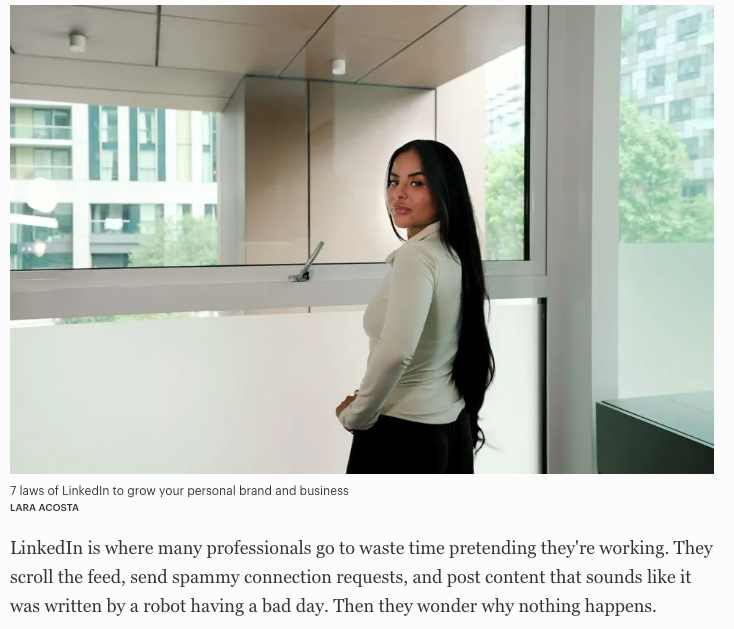
Lara Acosta is a co-founder of Kleo and holds the gold Top Voice badge on LinkedIn. She is also one of the fastest-growing personal brand builders the platform has seen, going from zero followers to over 500,000 in under three years.
And there's a reason she's not only featured as a Top Voice within LinkedIn but also on platforms like Forbes.
What makes Lara's story instructive is the method, not the outcome.
She started posting three times a week on a single topic: personal branding. She wrote about things she had actually done, tested, and learned, not things she had read about. She engaged genuinely in her comment section and built relationships with other creators in adjacent spaces. She showed up without exception.
The badge followed the behavior. The 500,000 followers followed the badge. The speaking invitations, the brand partnerships, and the inbound client inquiries followed the followers. None of it happened in reverse.
21 LinkedIn Top Voices Worth Following in 2026
Of course, we all know the uber famous LinkedIn Top Voices like Simon Sinek, Brené Brown, Justin Welsh, Scott Galloway, and Steven Bartlett (Diary of a CEO), but here are 21 Top Voices we think deserve a mention.
These are creators across different niches who exemplify what Top Voice-level LinkedIn content looks like in practice.
The pattern across all 21 is the same: a specific niche, a consistent voice, a genuine commitment to the community, and years of showing up. Not one of them built their Top Voice status in a month.
Rob Hoffman | Content-Led Growth & SaaS
80K+ followers | Co-Founder, Kleo; CEO, Contact Studios
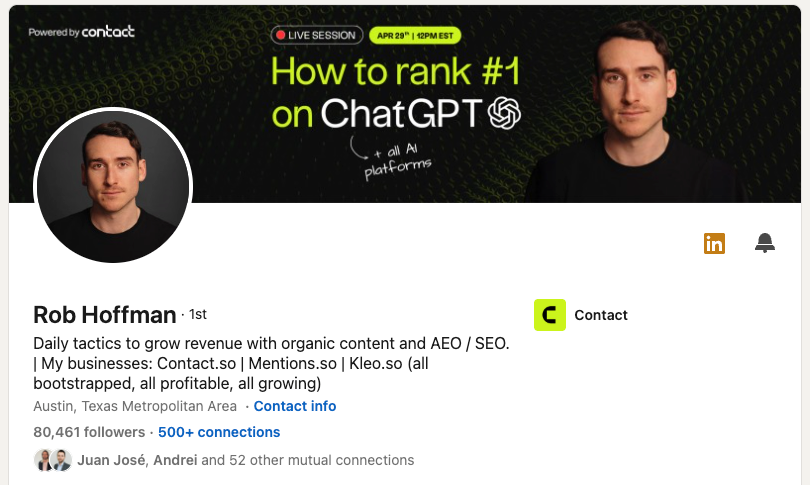
Rob has built Contact, Kleo, and Mentions, and he posts exactly how he does it: specific, honest, and with the actual numbers.
As a Kleo co-founder, he is both the creator of the system and the proof that it works.
Jake Ward | SEO & Content Growth
190K+ followers | Co-Founder, Kleo; Co-Founder, Contact
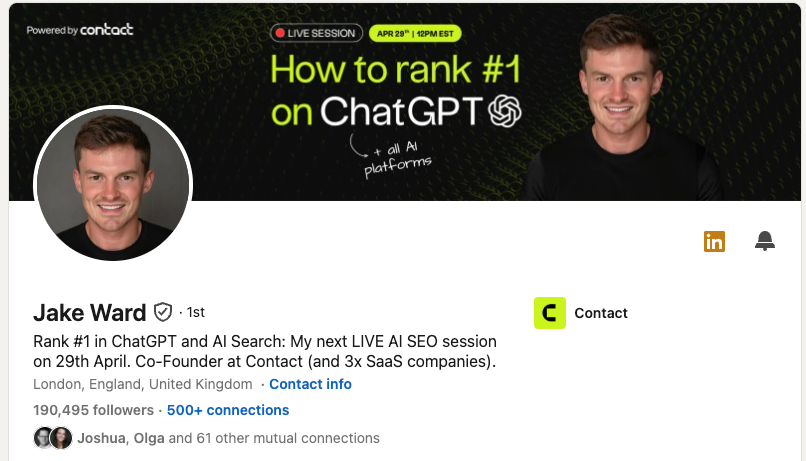
Jake has co-founded Contact, Kleo and Mentions almost entirely through LinkedIn
He is also the SEO founder who built his LinkedIn audience by sharing exactly what he was testing, including the failures.
As a Kleo co-founder, he helped create the tool that makes consistent, voice-driven content sustainable for creators and founders who have a lot to say but not enough time to say it.
Lara Acosta | Personal Branding
+320K+ followers | Co-Founder, Kleo; Personal Brand Strategist
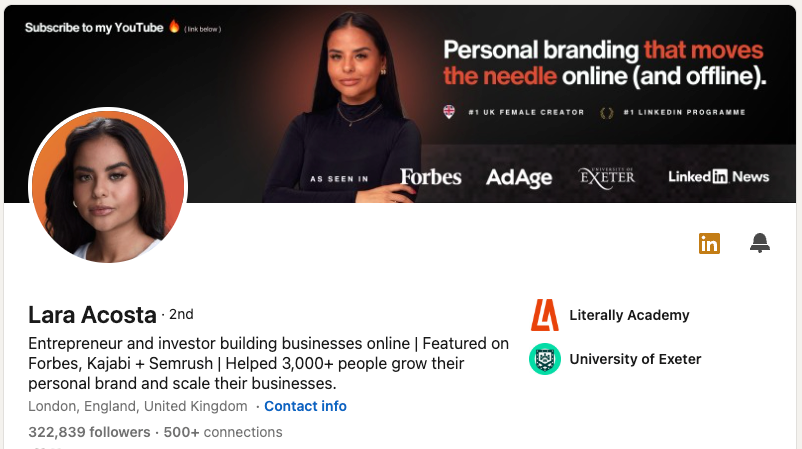
Lara Acosta went from zero LinkedIn followers to 500K in under three years, and she did it by writing like herself rather than like a creator. As a Kleo co-founder, she helped build the tool from the inside, using it daily and sharing the results transparently with her audience.
She famously deleted all her social media platforms EXCEPT for LinkedIn and YouTube!
Ashley Carman | Media & Podcasting
10 256 followers | Reporter, Bloomberg News
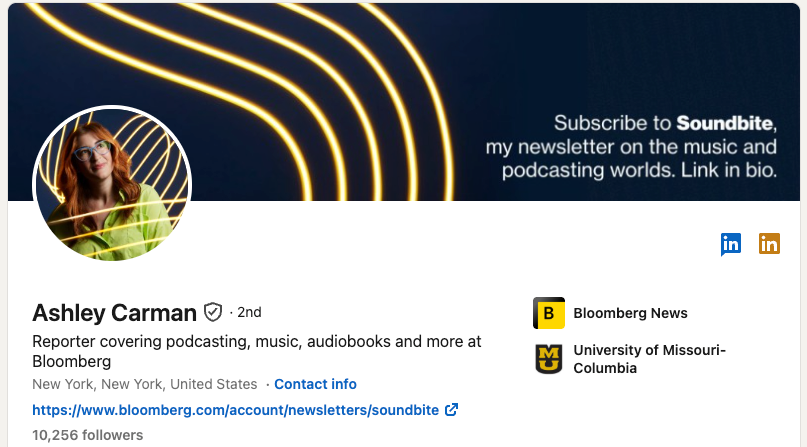
Ashley covers the audio industry at Bloomberg, tracking the business behind podcasting, music streaming, and audiobooks. Her Soundbite newsletter breaks down the deals, layoffs, and strategy moves that shape what you listen to every week.
Kim Kaupe | Entrepreneurship & LinkedIn
72K+ followers | Founder, Bright Ideas Only
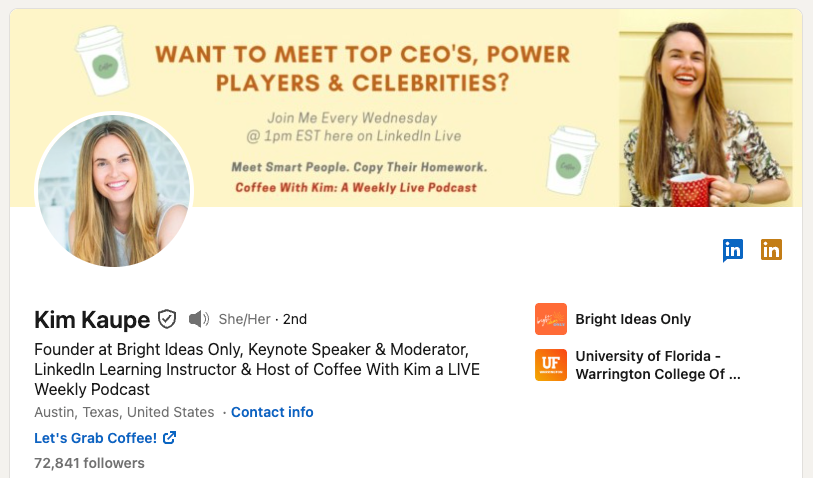
Kim is an accidental entrepreneur who built a business working with some of the biggest names in entertainment before pivoting to teach others how to do the same.
Her LinkedIn Learning courses and live Coffee With Kim sessions have helped thousands of professionals build their presence and their brands.
Amanda Natividad | Content Marketing
100K+ followers | VP Marketing, SparkToro
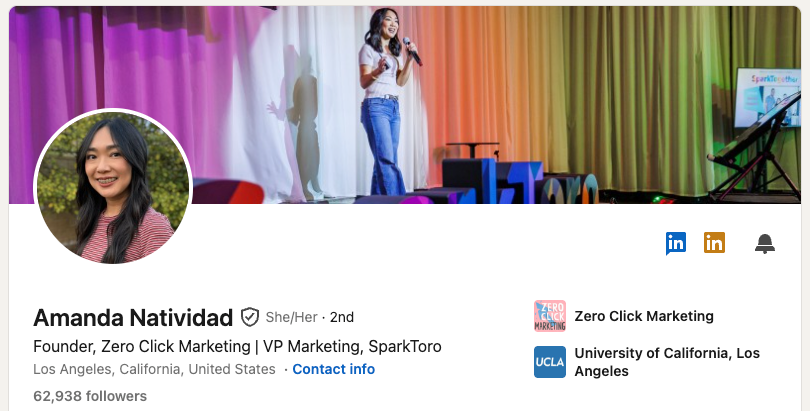
Amanda turned a chef’s background into a marketing career and became one of the sharpest thinkers on how content works when clicks are no longer the goal.
Her zero-click content framework has changed how many marketers think about distribution, and her newsletter's 40% open rate speaks for itself.
Hanna Goefft | Career & Future of Work
500K+ followers | Career Content Creator
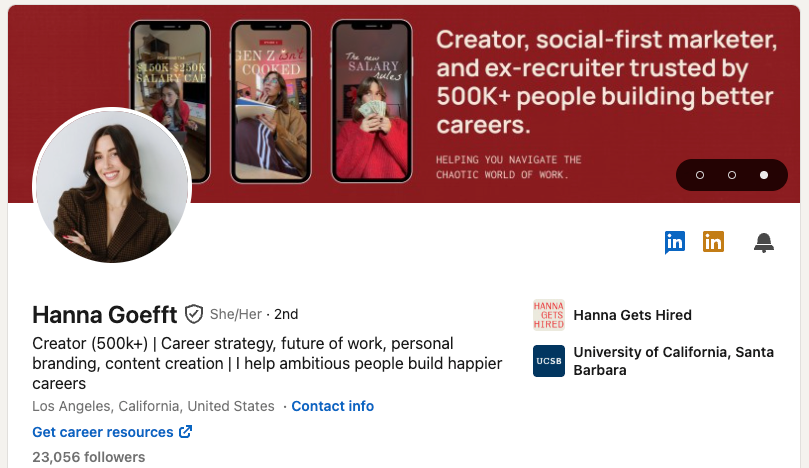
Hanna has been on all sides of the hiring table, as a job-seeker, recruiter, and hiring manager, and she brings that full picture to every piece of content.
Her honest takes on career pivots, burnout, and the modern job market have built one of the most engaged communities in the career space.
Colin Rocker | Career & First-Gen Professionals
420K+ followers | Career Educator & Founder, For The Firsts
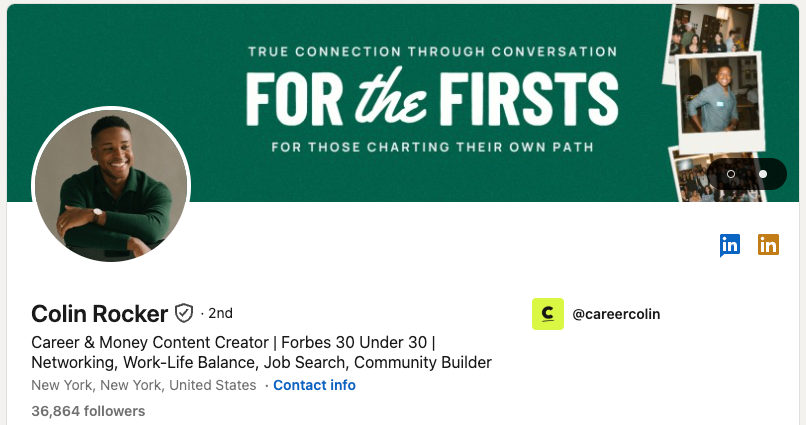
Colin turned a layoff announcement into a full-time content career, and he did it by finding a specific audience nobody was speaking to directly: first-generation professionals navigating the gaps that traditional career advice never covers. His monthly NYC meetups have become a genuine community.
Myechia Minter-Jordan | Health Equity & Leadership
10K+ followers | CEO, AARP
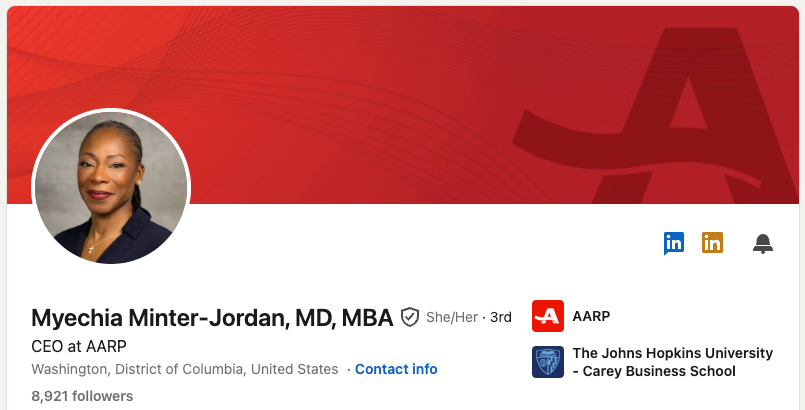
Dr. Minter-Jordan spent her career building healthcare systems that work for the people most left behind by them. Now leading AARP, the largest nonprofit membership organization in the US, she posts on healthcare equity, leadership, and what it takes to drive real change at scale.
Sandy Carter | AI & Enterprise Tech
200K+ followers | Chief Business Officer, Unstoppable Domains
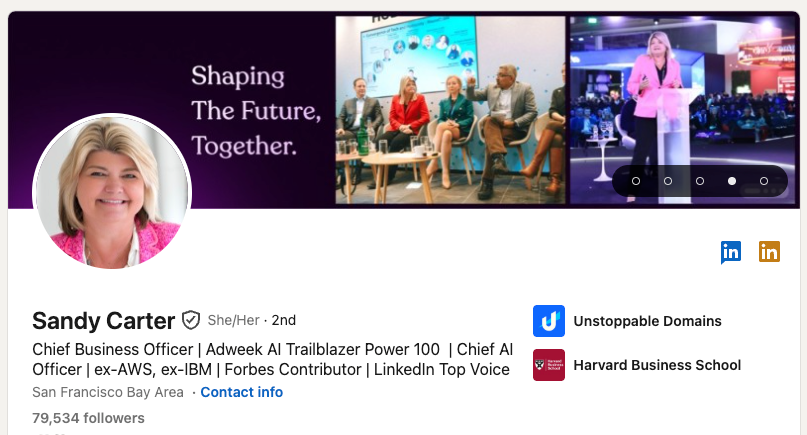
Sandy has led AI at the enterprise level across five different C-suite roles, and she brings that rare operational depth to everything she posts. Where most AI content is commentary, Sandy’s is execution, grounded in what it actually takes to move from AI strategy to AI revenue.
Carmen Vicente | B2B Social Media Strategy
10K+ followers | Social Media Strategist
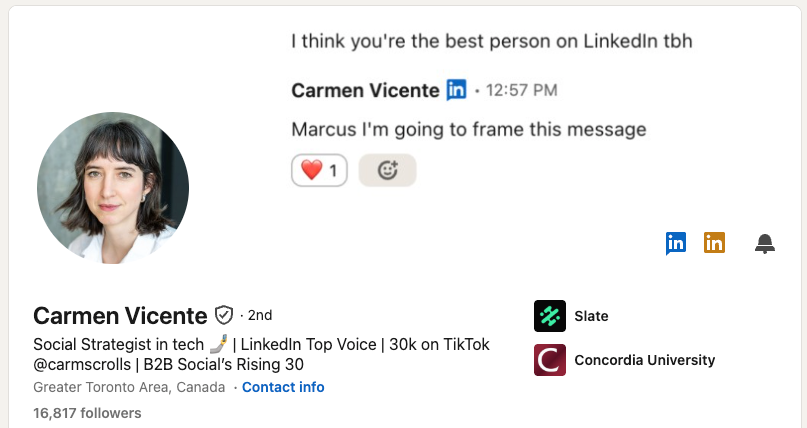
Carmen is one of the sharper voices on B2B social strategy, particularly for tech companies trying to build a genuine presence rather than just post content.
Her work sits at the intersection of storytelling, brand trust, and the very specific craft of writing for professionals.
Zaria Parvez | Social Media & Brand Strategy
143K+ followers | Social Media Manager, DoorDash (ex-Duolingo)
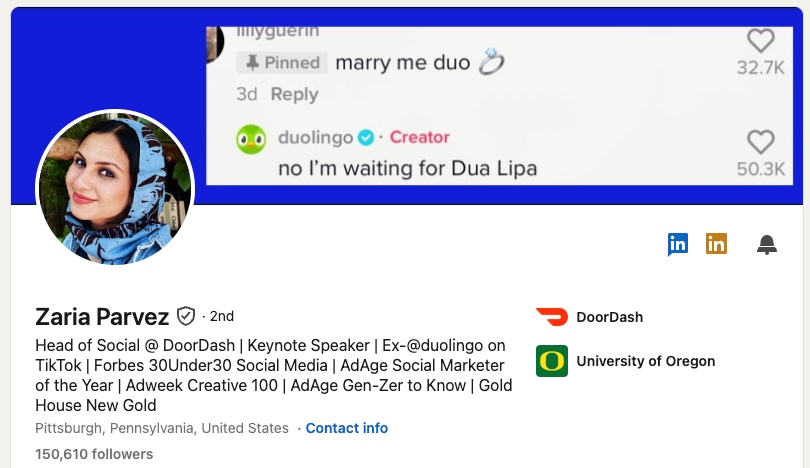
Zaria is the person who made a green owl go unhinged on TikTok and turned it into one of the most studied brand plays in modern social media.
She now writes honestly about what that journey cost, what she learned, and how brands can build real audiences without losing themselves in the process.
Ryan Holiday | Stoicism & Philosophy
1M+ followers | Author & Founder, Daily Stoic
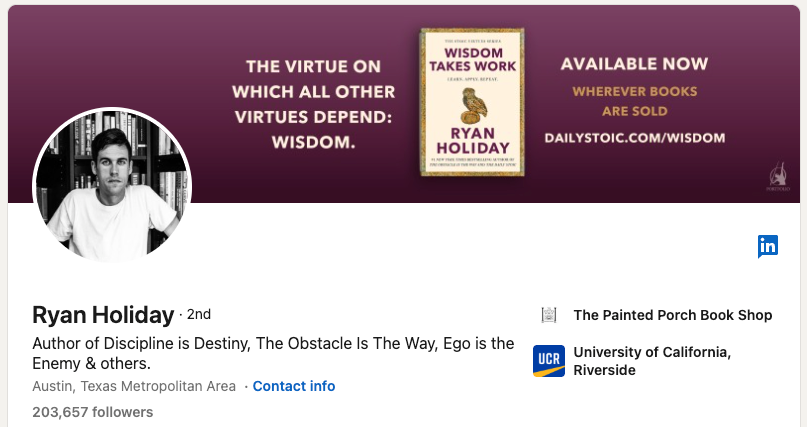
Ryan has sold more than two million copies of The Daily Stoic, and his LinkedIn carries the same deliberate, principle-based voice. Ryan doesn’t post for engagement.
He posts because he believes the ideas matter, and that sincerity is exactly why they land with the people who find him.
Lars Schmidt | Future-Focused Talent Executive
64K+ followers | Future-Focused Talent Executive; Founder, Amplify
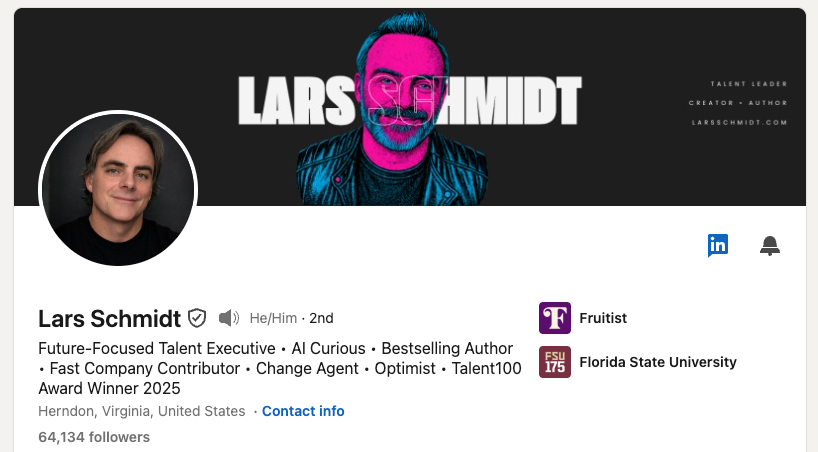
Lars has spent years studying how the best companies find, develop, and keep great people, and he posts exactly what he learns in a voice that is direct, curious, and genuinely optimistic about where work is going.
As a Fast Company contributor and Talent100 award winner, he is one of the most credible HR voices on LinkedIn for anyone building a people-first organization in an AI-shaped world.
Jess Ramos | Data Science & AI
271K+ followers | Data Scientist & Founder, Big Data Energy
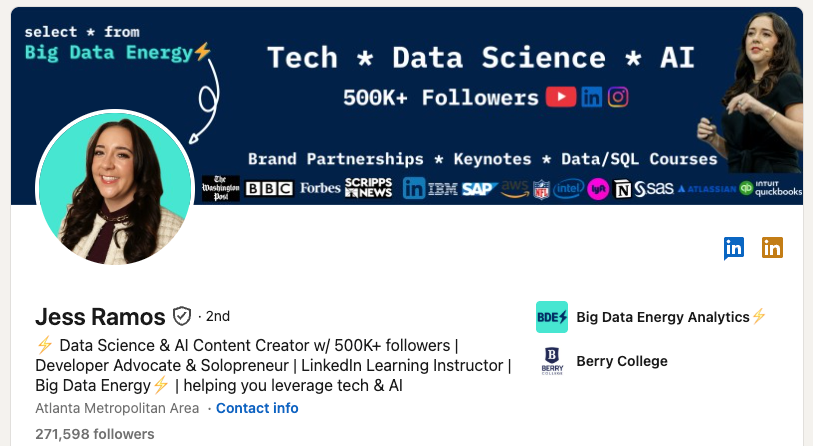
Jess Ramos holds the blue LinkedIn Top Voice badge in data science and AI, one of the most competitive niches on the platform. She is the founder of Big Data Energy and a LinkedIn Learning instructor with over 500,000 followers across platforms.
Jess made data science feel human, and that is genuinely hard to do. She writes about SQL, machine learning, and AI careers in a voice that is personal, energetic, and honest, including the parts about getting fired and what that taught her. The badge followed the community she built.
She talked about being a woman in data. She talked about getting fired and what she learned from it. She brought her whole self to a niche that most people treat as purely informational.
The lesson from Jess is that niche authority and authentic voice are not in tension; they reinforce each other.
The more specifically you own a topic, and the more genuinely yourself you are while doing it, the more distinctive and trustworthy your content becomes.
Yuechen Zhao | Venture Capital & Digital Health
21K+ followers | Partner, Informed Ventures
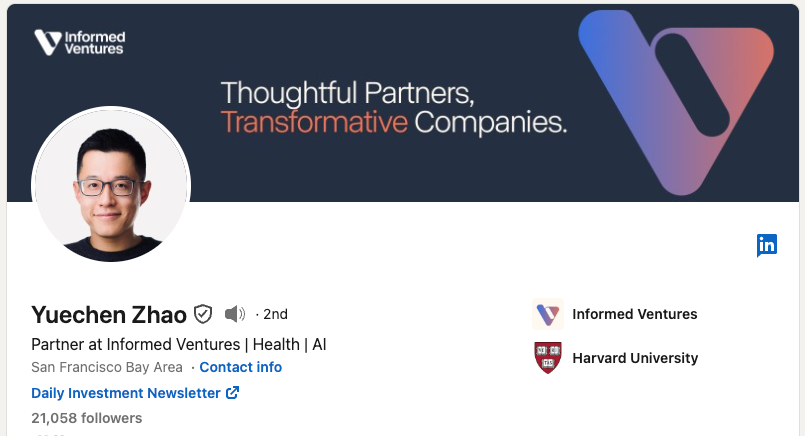
Yuechen brings an unusually practical lens to VC content because he was an operator at Google and Uber before he started writing cheques.
His posts on startup decisions, digital health investing and product thinking are the kind that founders actually save and return to.
Snoop Dogg | Entertainment & Entrepreneurship
740K+ followers | CEO, Death Row Records; Coach Snoop, Team USA
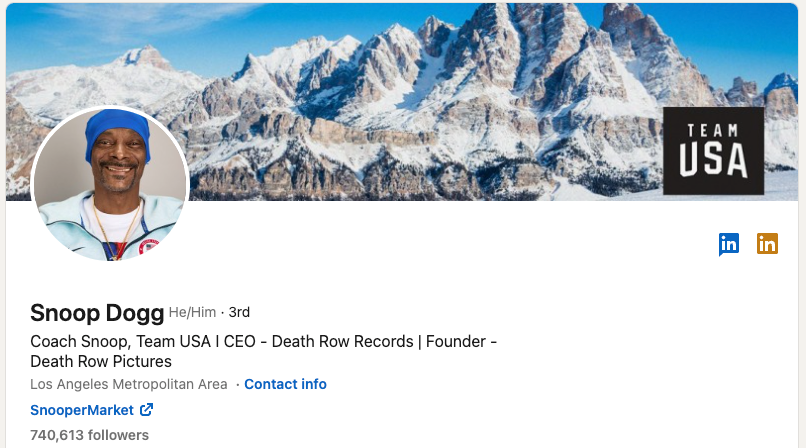
If Snoop Dogg can earn a LinkedIn Top Voice badge, anyone can!
He joined, posted authentically about his business ventures and his mission to uplift people, and the platform responded. It is the clearest possible proof that voice and consistency matter more than pedigree or background.
Marc Randolph | Entrepreneurship & Startups
338K+ followers | Netflix Co-Founder; Entrepreneur & Mentor
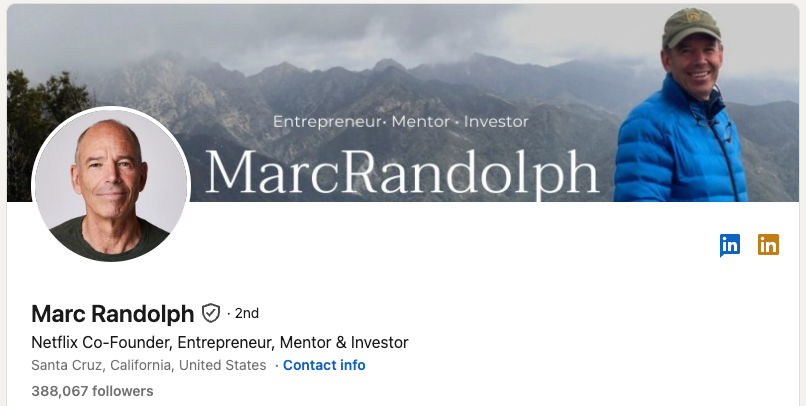
Marc co-founded Netflix at a time when the idea was genuinely laughable, and his LinkedIn is a daily reminder of what it actually takes to build something that lasts. He posts about the messy reality of startups, not the polished version, which is exactly what makes him worth following.
Wil Reynolds | SEO & Digital Marketing
30K+ followers | Founder & VP Innovation, Seer Interactive
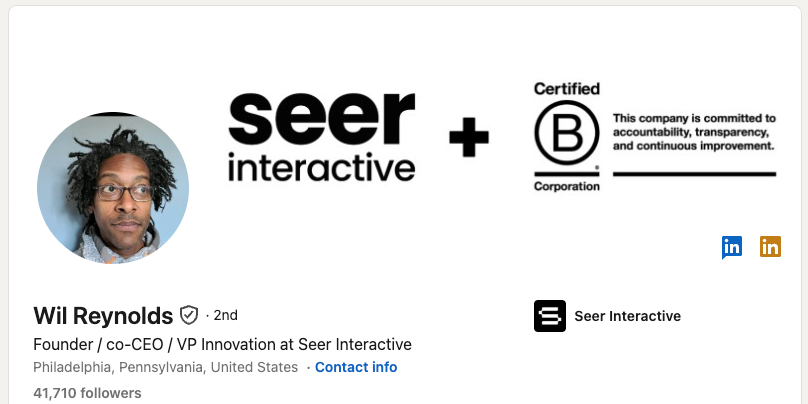
Wil started Seer Interactive from his living room in 2002 after his boss refused to let him volunteer on his lunch break.
Twenty-plus years later, he is still one of the most honest and practical voices in digital marketing, posting about AI, SEO and building companies with humanity intact.
Evan Shapiro | Media Strategy
100K+ followers | Media Universe Cartographer & Consultant
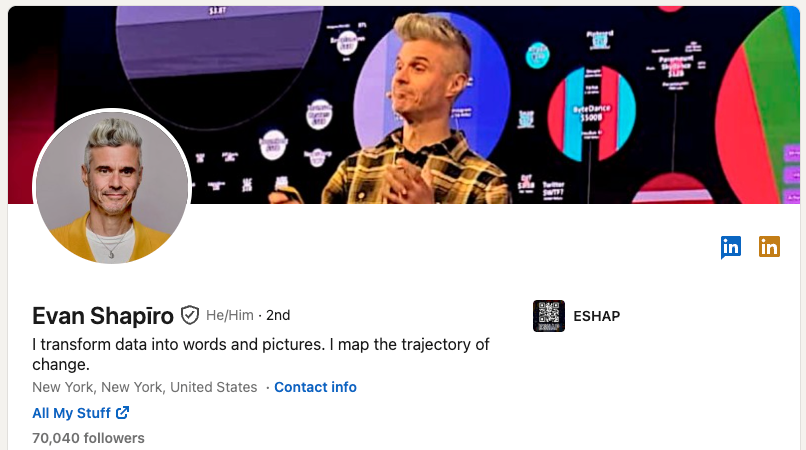
Evan has carved out one of the most genuinely distinctive niches on LinkedIn by literally mapping the media universe. His data visualizations and sharp commentary on streaming, advertising, and the creator economy have made him the go-to source for anyone trying to understand where media is actually going.
The Bottom Line
The Top Voice badge is the visible proof of something invisible: a sustained commitment to sharing what you know, in your own voice, with a specific community, without stopping.
Lara Acosta didn't wake up one day as a LinkedIn Top Voice. She posted three times a week for years, wrote about real things she had actually done, and built genuine relationships in her comment section. The badge arrived because the behavior earned it.
Jess Ramos didn't become the go-to voice in data science by accident. She made a technical field human, showed up consistently, and made the people reading her posts genuinely better at their work. The 500,000 followers are the proof. The badge is the acknowledgment.
That's the path. Not a hack. Not a workaround. A system you commit to for long enough that LinkedIn has no choice but to take notice.
Build the knowledge base. Find your niche. Post three times a week. Engage like you mean it. Show up when you don't feel like it. And use every tool available to make that sustainable, including Kleo.
The badge will follow the behavior. It always does.
Ready to build the LinkedIn presence that earns Top Voice recognition? Start with Kleo, your knowledge base, your voice, your system.
Frequently Asked Questions
What is the difference between a LinkedIn Top Voice and a LinkedIn Influencer?
LinkedIn Influencer was the name of the program before October 2022, when LinkedIn renamed it Top Voices and merged both programs. All former LinkedIn Influencers are now part of the Top Voices program. Today, 'LinkedIn Influencer' is an informal term used broadly to describe anyone with a significant, engaged following on the platform, while 'LinkedIn Top Voice' is the official, badged recognition program. A LinkedIn Influencer in the colloquial sense might or might not hold a Top Voice badge. A LinkedIn Top Voice always does.
How many people are in the LinkedIn Top Voice list?
The blue Top Voice badge is awarded to approximately 300 people per year globally, making it one of the most selective professional recognition programs on any social platform. The gold Community Top Voice badge is held by around 7,000 people at any given time across all topic categories. Both numbers represent a tiny fraction of LinkedIn's 1 billion+ member base.
Can you apply to become a LinkedIn Top Voice?
No. There is no application process for either badge. The blue badge is awarded purely by invitation from LinkedIn's editorial team based on your content quality, consistency, audience engagement, and niche authority. The gold badge is earned by contributing substantively to LinkedIn Collaborative Articles in your topic area and being upvoted by the community. You cannot apply, you can only build the behavior that earns recognition.
How long does it take to become a LinkedIn Top Voice?
For the blue badge, expect a realistic runway of 12 to 24 months of consistent, high-quality content in a defined niche before LinkedIn takes notice. Although some have done it in a week!
Some creators have been recognized faster with exceptional content and strong engagement. Most take longer. For the gold badge through Collaborative Articles, consistent contributors have earned recognition in as little as a few weeks of active participation, though this is a narrower recognition tied specifically to article contributions rather than your broader content strategy.
What happens if you lose your LinkedIn Top Voice badge?
LinkedIn reviews Top Voice badges twice per year. If you become inactive, stop posting consistently, disengage from your community, or significantly reduce the quality of your content, LinkedIn can remove your badge.
The blue badge requires ongoing activity to retain. The gold badge tied to Collaborative Articles also expires if you stop contributing.
Bottom line, the Top Voice status is not permanent. It reflects your current activity, not a reward for past work.
Do you need a large following to become a LinkedIn Top Voice?
Not necessarily. LinkedIn's editorial team looks at content quality, engagement rate, and niche authority, not just follower count. A creator with 5,000 deeply engaged followers in a specific industry can be more relevant for Top Voice recognition than someone with 50,000 passive followers across multiple unrelated topics. That said, building a meaningful audience is a natural byproduct of doing the things that earn Top Voice recognition. The two tend to grow together.
What is the difference between the blue and gold LinkedIn Top Voice badge?
The blue badge is invitation-only, awarded to approximately 300 people globally per year by LinkedIn's editorial team. It represents the highest level of recognition on the platform and is reserved for senior experts who have demonstrated sustained excellence in a specific domain. The gold badge is earned through consistent contributions to LinkedIn Collaborative Articles in a specific topic area and is held by around 7,000 people at any one time. Both are valuable, but they serve different purposes and require fundamentally different paths.
How does Kleo help with becoming a LinkedIn Top Voice?
Kleo helps with the two things that matter most for Top Voice recognition: niche authority and consistency. The knowledge base learns from your experiences, expertise, and ideas so that your content is always grounded in your genuine perspective rather than generic AI output. The scheduler and content tools make showing up three to five times a week sustainable over the 12 to 24-month runway that Top Voice recognition typically requires. The weekly community strategy sessions provide the editorial feedback that helps you improve faster than you would alone.